How to Choose a Dune Buggy in Dubai
Knowing What You Want from a Buggy
Dubai's desert landscape is a natural playground for off-road vehicles. Dune buggies are built to handle sand, steep slopes, and uneven terrain. Before you look at any machine, think about how you plan to ride. Are you going alone, or are you taking a passenger? Do you want a fast, nimble ride, or something more stable for long trips across the dunes? Your answers will guide every decision that follows.
Seat Count: Single vs. Two-Seater
The first fork in the road is how many people the buggy carries. Single-seaters are lighter, more agile, and generally faster. They are a good fit if you want to feel every bump and carve your own line through the sand. Two-seaters add weight and width, which can make them feel less responsive, but they let you share the experience. If you plan to ride with a friend or a family member, a two-seater is the obvious choice. Just be aware that the extra mass changes how the buggy handles on soft sand; you may need a bit more momentum to crest a dune.
Engine Size and Power
Buggy engines range from around 500cc to over 1000cc. A smaller engine is lighter and easier to control, which suits beginners or riders who prefer a relaxed pace. Larger engines give you more torque for climbing steep dunes and more speed on flat stretches. The trade-off is weight and fuel consumption. For most riders in Dubai's dunes, an engine in the 800cc to 1000cc range strikes a good balance. If you are new to off-roading, start on the lower end; you can always move up as your confidence grows.
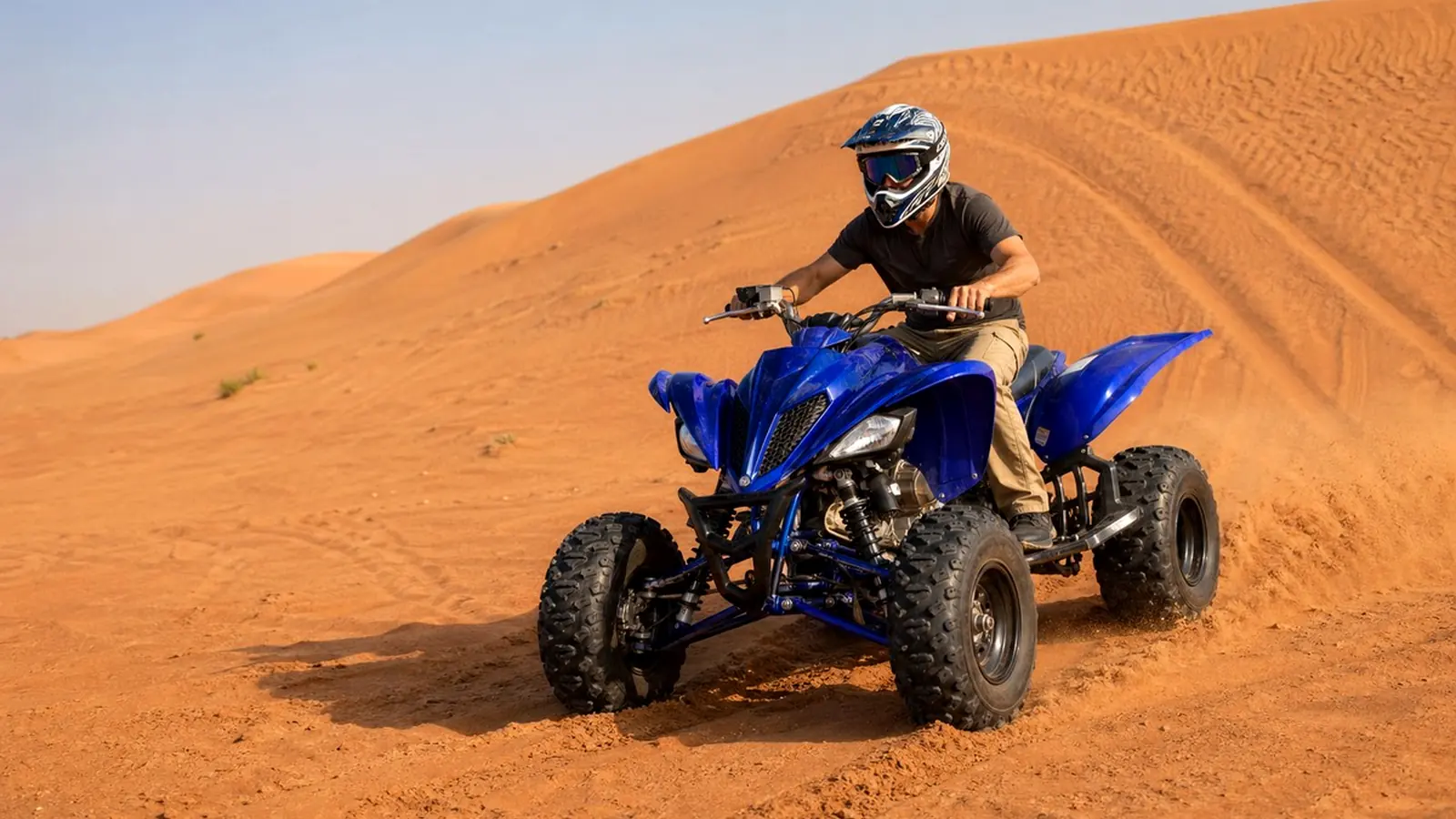
Build and Suspension
Dune buggies take a beating. The frame should be sturdy, typically a steel or aluminium chassis, with good weld quality. Look at the suspension system. Independent suspension on all four wheels gives the best ride over rough ground. Coil-over shocks are common and work well for most sand conditions. If you plan to tackle very large dunes or fast runs, a buggy with adjustable dampers lets you tune the ride stiffness. Check that the suspension travel is enough to avoid bottoming out on sharp dips. Ask about the type of tyres fitted; sand-specific tyres with a paddle tread provide better grip than general-purpose off-road tyres.
Safety Gear You Should Expect
A buggy ride in the desert comes with real risks. A proper safety harness is non-negotiable. Look for a four-point or five-point harness that holds you firmly in the seat. The buggy should also have a roll cage or frame that protects you if the vehicle tips. A helmet is standard; make sure it fits snugly and is rated for motorsports. Goggles or a visor keep sand out of your eyes. Some buggies include a kill switch that stops the engine if you are thrown from the seat. Always confirm what safety equipment is provided and what you need to bring yourself.
Rental vs. Buying
Most visitors to Dubai rent a buggy rather than buy one. Rental lets you try different models without a long-term commitment. When you rent, you usually get a brief orientation and a guide who knows the terrain. Buying makes sense only if you live in the area and plan to ride regularly. If you are renting, ask about the condition of the fleet. Well-maintained buggies have fewer breakdowns and are safer. Check the rental agreement for what is covered; some operators include fuel, insurance, and a guide, while others charge extra.
Terrain and Guidance
Dubai's sand dunes vary from soft, powdery slopes to hard-packed ridges. A buggy that handles one type may struggle on another. If you are not familiar with the area, riding with a guide is wise. Guides know the safe routes, the best dunes for climbing, and the spots where the sand is too soft for a standard buggy. Some operators offer guided tours that last a few hours; others let you ride independently within a marked area. For your first few trips, a guided tour reduces the chance of getting stuck or lost. One local option is Buggy Ride Dubai - Quad Bike ATV & Dune Buggy Tours.
Checking the Buggy Before You Ride
Before you set off, do a quick walk-around. Check the tyre pressure; too high and the buggy will sink in soft sand, too low and you risk damaging the rim. Look at the fluid levels: fuel, coolant, and hydraulic fluid for the brakes. The brake pedal should feel firm, not spongy. Test the steering; there should be no excessive play. Make sure the safety harness latches and releases smoothly. If anything looks off, ask the operator to fix it or choose a different buggy. A few minutes of inspection can save you hours of trouble in the desert.

Buggy Ride Dubai - Quad Bike ATV & Dune Buggy Tours is also on Facebook.
What to Wear
Dress for the desert. Long sleeves and trousers protect your skin from the sun and from sand kicked up by the buggy. Closed-toe shoes are a must; sandals or flip-flops offer no protection. A scarf or a shemagh can keep sand out of your mouth and nose. Sunscreen on any exposed skin, even if you think you will not be out long. Bring plenty of water; dehydration creeps up fast in the heat. A small backpack with a hydration bladder is more convenient than a bottle.
Understanding the Rental Agreement
Read the terms before you sign. Look for clauses about damage liability; some operators charge a flat fee for any damage, while others assess costs per part. Check what happens if you get stuck in the sand. Many tours include recovery, but some charge extra. Confirm the duration of the rental and whether it includes travel time to and from the dunes. If you are booking through a third-party site, make sure the operator is clearly identified. For more details, you can visit Buggy Ride Dubai - Quad Bike ATV & Dune Buggy Tours official site.
Planning Your Route and Time
Morning and late afternoon are the best times to ride. The light is softer, and the temperature is lower. Midday heat can be brutal, both for you and for the buggy's engine. Plan a route that matches your skill level. Beginners should stick to moderate dunes and avoid very steep faces. Experienced riders can look for longer loops that cover more varied terrain. Always let someone know your planned route and expected return time. The desert has no phone signal in many areas, so a satellite phone or a personal locator beacon is a good backup.
After the Ride
When you return the buggy, rinse off the sand and check for any damage that occurred during the ride. Report any issues to the operator immediately; waiting until later can lead to disputes. If you bought fuel separately, note how much you used; it helps you estimate for next time. A quick debrief with your guide can give you tips for future rides. If you enjoyed the experience, it is worth asking about loyalty programmes or multi-ride discounts.
The address for Buggy Ride Dubai - Quad Bike ATV & Dune Buggy Tours is The One Tower - Office No. 2513 25th Floor - Al Thanyah First - Barsha Heights - Dubai - United Arab Emirates.